


The Bondtech INDX Founders Edition is out in the wild – huge congrats to our friends from Bondtech! 🙂
With that milestone behind us, we’re moving to the next phase: shipping the “standard” INDX Conversion Kit for CORE One/+. Since the Founders Edition was delayed, our timeline also had to be adjusted. The first units are scheduled to leave our factory by the end of July, and we remain on track to ship the entire first batch by the end of August.

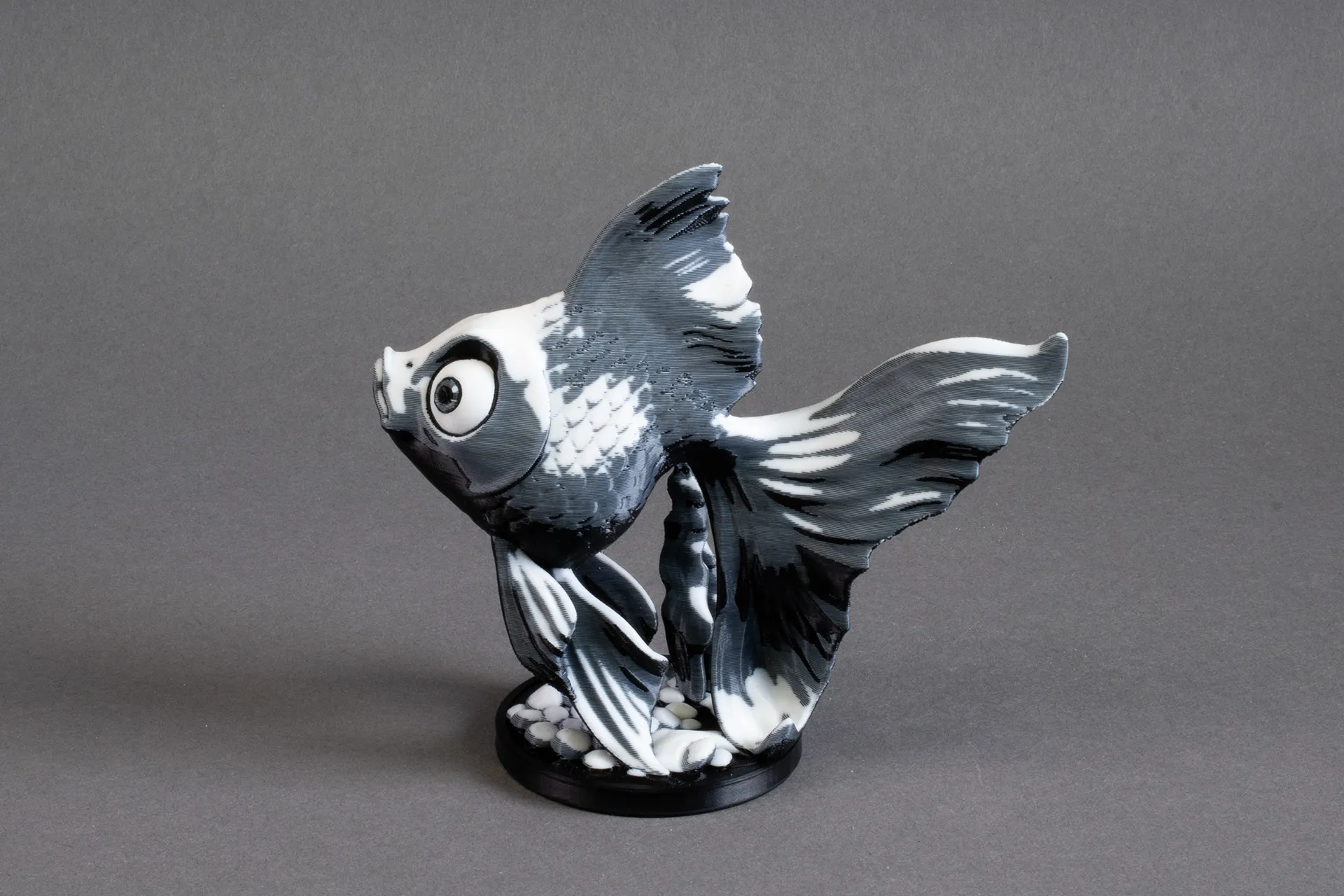
This is an actual model from the INDX placed at the seabed – don’t worry, we did not leave it there 😉
Since I already started writing this, and INDX has been churning out one print after another in our office for the past few months, I figured it’s the perfect time to talk more about the improvements and upgrades INDX has received since we announced it. After all, we haven’t been sitting on our hands. Of course, there were things like sourcing better components and similar, manufacturing-related things. But that’s probably not what’s very interesting for you.
Instead, let’s take a look at some genuinely cool stuff.
The current state
Our partners from Bondtech started shipping the INDX Founders Edition, and the first units are already in the hands of early adopters. Meanwhile, we continue to fine-tune the experience. Our main focus is on print profiles – improving PLA print quality, adding more advanced materials, and offering more nozzle diameters.

As always, you can expect us to provide support for months and years to come. We’re also continuously collecting feedback and redirecting our efforts wherever necessary – special shout-out to our community for being very active on Reddit and Discord!

We’ve been showcasing the INDX on every possible occasion, so you could see it running and amassing thousands of tool changes in real time.
Here are a couple of things you might have missed:
New Docking Panel
This is a small, but pretty convenient upgrade – the front panel is less dense, offering a better look at the parked tools and also into the printer. However, the best options are still either the Buddy camera mounted inside the chamber or placing the printer on an easily accessible desk and opening the hinged cover.
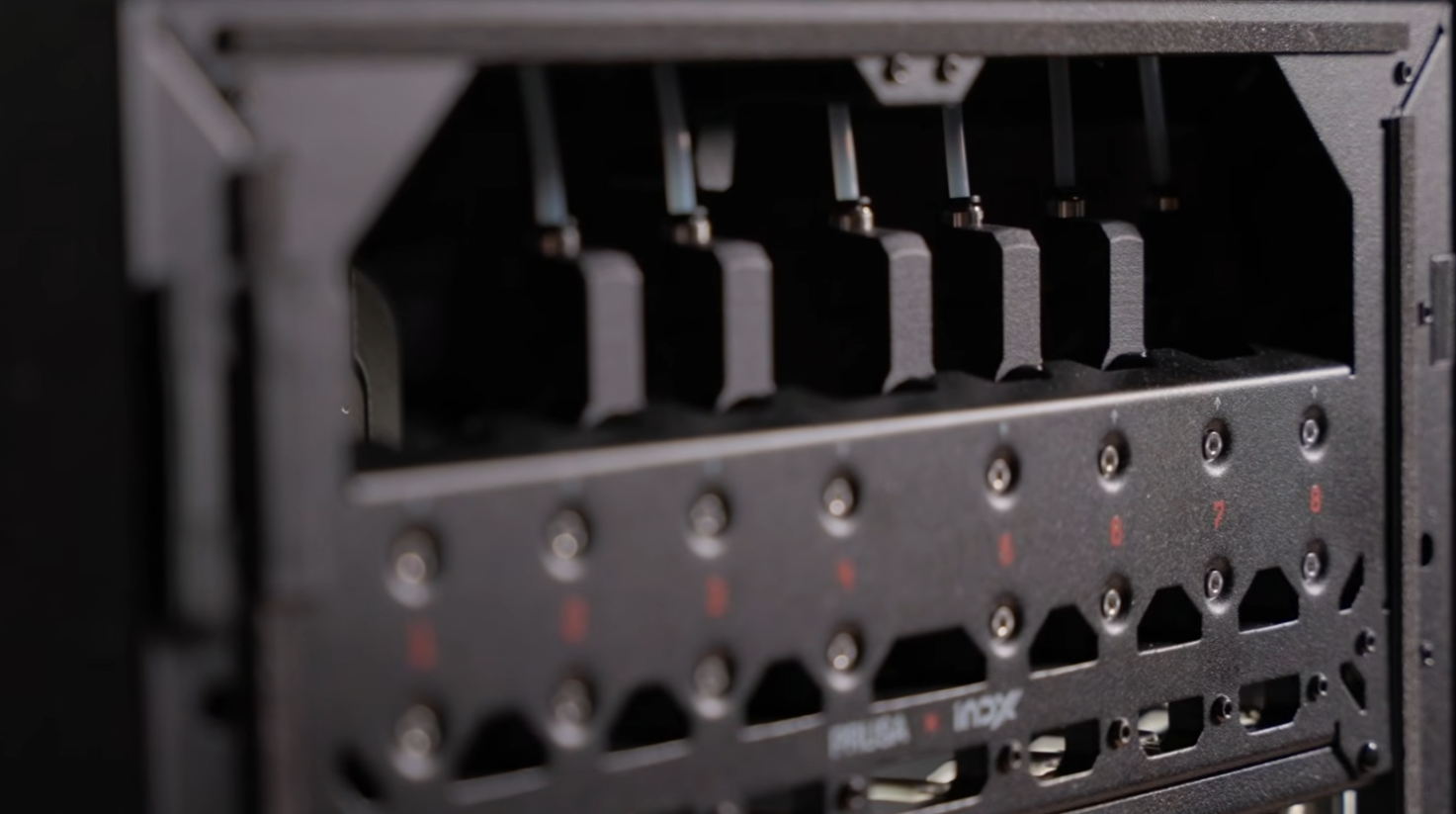
Your favorite community manager, Tommy, recorded a short video describing the changes, so we invite you to take a look – both at the new design and also at the guy who relentlessly responds to your comments on Reddit, day and night. 😉
The nozzle cleaner and the waste bin
We’ve always been looking for ways to minimize plastic waste from multi-material prints. While the XL can achieve completely waste-free printing, it requires properly dried filaments with minimal humidity, so a wipe tower is often present. However, the INDX purges such a small amount of material that a regular wipe tower would be very unstable. We would have to purge much more material – and that was not an option. This is why we decided to implement something that is faster, more efficient, and even keeps your nozzles clean at all times: a waste bin with a silicone nozzle cleaner.
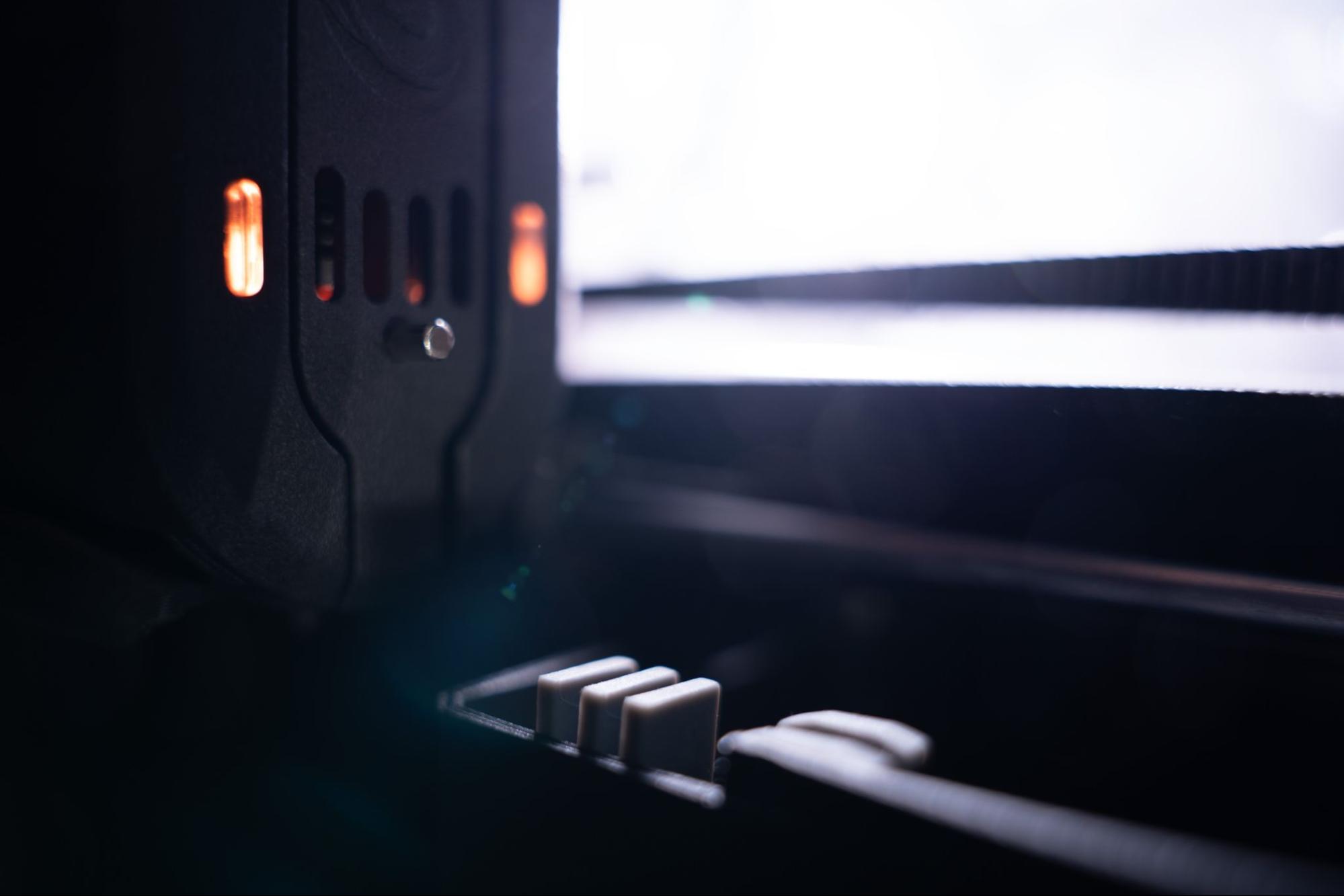
Why is this all necessary at all, you may ask? Before each of the nozzles resumes printing, the pressure inside the nozzle needs to stabilize – we call this “priming”. You need to prime the nozzle to maintain the same surface quality across the entire print.
The bin itself is large enough to hold priming pellets from a couple of smaller or one big print job. And we’re also preparing an alternate, larger option that will fit in the side panel of the printer. The firmware is already prepared for this – there is a menu switch for an “extended” waste bin, should you choose to try a DIY approach before an official model is available.

We stand by our claim that the priming pellets are incredibly tiny and lightweight, far ahead of any other competing solution on the market. The average weight is around 0.013-0.015g.
Waste is what makes the difference
Imagine throwing out almost an entire spool of filament every time you print something with multiple colors. That’s the sad reality of some of the cheapest multi-color solutions.

We took five different 3D printers and put them to a test using a typical model a 3D printer user will probably print at some point – the differences are massive. In the picture above, the final model was 81.7 grams, whereas the total amount of waste produced could be as much as 696.4g. Depending on the price of your filament, that’s $10-$21 (roughly 10-25€) thrown into waste every time you print something moderately complex. INDX clearly wins with only 29g of waste.
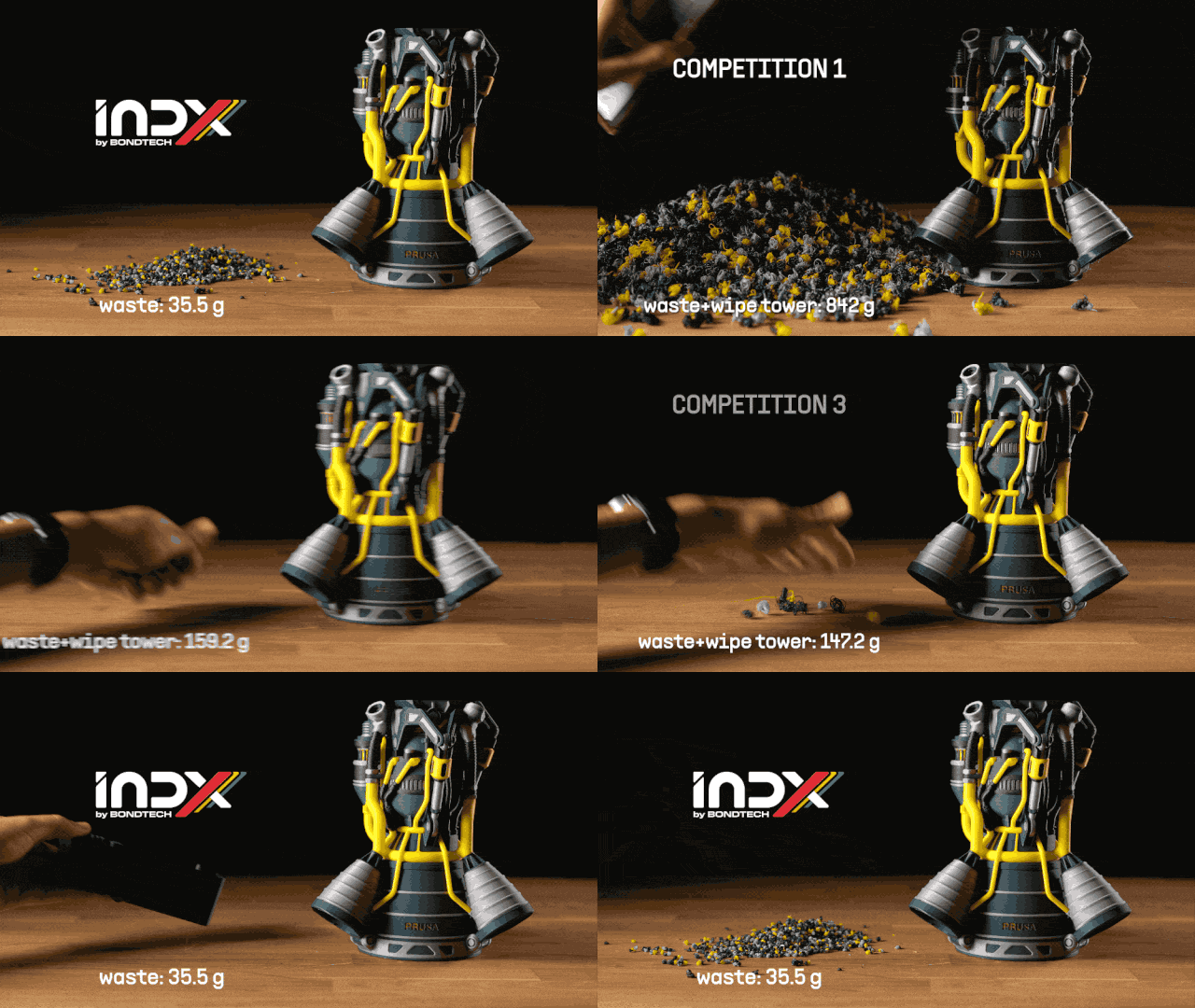
In the case of the Rocket Engine, the INDX produces nearly 30 times less waste compared to the most wasteful option. 842g of wasted filament in the first case – almost an entire spool.
We want to be fair and also mention that not every object produces the same ratio of waste per printed object, but the differences are still pretty substantial. For our comparison, we used the default print profiles suggested by the manufacturer without additional tweaking.
Automatic Tool Offset Calibration
Another major thing that was implemented since the INDX’s initial reveal is the automatic offset calibration board – the Tool Offset Sensor. It’s essentially a small piece of electronics that can measure the offset of each individual toolhead with absolute precision – for instance, it cannot be thrown off by a dirty nozzle. We believe that INDX users will like to switch nozzles to tackle various projects – offering a fully automated calibration makes a lot of sense.
This is a much faster solution compared to, e.g., a calibration pin. The tool offset calibration runs through several steps – first, is the Tool offset’s Z position calibration using the loadcell. Then comes an X-axis scan directly over the inductive sensor, followed by the same in the Y axis. Each scan is performed four times: forward and back, then again at a slower speed. This lets us eliminate errors caused by measurement lag relative to tool movement. The signal is filtered and processed.

Tool offset calibration runs on every print start (the nozzle is cleaned using the new nozzle cleaner) to ensure we always have fresh values at hand. This means users can change tools (nozzles) in between prints without any further inconvenience.
With this solution, we’re achieving outstanding accuracy and consistent results. The best proof is that INDX is great for ColorMix, which requires a highly precise printer.
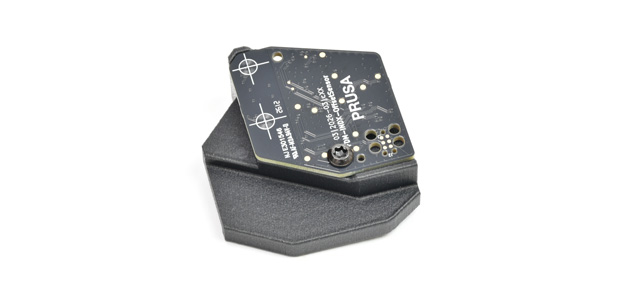
A little side note: We considered using a camera, but the inductive sensor is less sensitive to residual filament debris, so it won out. On the other hand, inductive measurement is sensitive to electromagnetic interference, so before each measurement, we disable the ultra-fast inductive heating of the new INDX toolhead and PWM bed regulation.
We also recorded a simple-to-follow video showing how to complete the initial Wizard. Plus, if you’re curious, the entire step-by-step installation guide is already online. According to the users, the usual installation time is around 5-6 hours.

EasyPrint, PrusaSlicer, and ColorMix
In the months that led to the release of the INDX, we’ve spent plenty of time optimizing and improving the user experience with our slicing software. Major updates for EasyPrint and PrusaSlicer completely reworked the way you use colors in your prints, enabling you to use dozens of color tones.

Our implementation is called ColorMix, and it uses a method called Halftoning to produce really awesome prints.

With the 8-tool INDX, you can go all the way to CMYKW+RGB setup, unlocking a truly vast color palette.
If you missed our article and video, do check them out – it’s the perfect example of how much can be achieved with a 3D printer.
And one more thing you can play with: the Color Mix Shading app – it enables you to create some really unique effects using virtual lights and baked-in shading.
Upcoming updates
We’re working hard on resolving any remaining issues and preparing additional sets of printing profiles for PrusaSlicer. We have recently released a new firmware (6.6.1), and we’re bringing four more print profiles very soon.

We will also get back to you regarding the larger waste bin solution, and there are some more interesting technical features we want to talk about – but we’ll keep it for next time.
We’ll bring you more updates soon as we get closer to the shipping date – our full focus is now on getting the first batch of units to you.
thank you, welcome news!
Could you please insert links to the models shown within the post
Nice to hear the conversion kit for the CoreOne/+ is shipping.
The info on improvement and upgrades is interesting and welcome.
What about the timeline for the conversion for the CoreOneL?
The initial announcement stated the CoreOne family conversion shipping in the second quarter.
Later, it's the CoreOneL is several months away.
Are we actually going to get the INDX upgrade for the CoreOneL as promised?
I'd like to know about the timeline for the Core One L INDX as well. I picked up the Core One L specifically because of the promise for the INDX. It's a great product already, but I'd love to see it at its full potential.
There will be a very minor update on that tomorrow in a new blog post
I didn't saw a minor update related that point. Did I missed something?
The waste bin with silicone wiper looks like it has potential remix capabilities to be implemented on an non INDX C1 printer. It would be nice to have somewhere to periodically wipe the nozzle (potentially using an if statement in a custom layer change gcode) when printing with sticky filaments like PETG.
I'm not in front of my printer right now, but is the nextruder able to move all the way to the right far enough for the tip of the nozzle to engage with where the wiper of the C1+INDX's waste bin would be? Or is the tip of the nozzle of the nextruder geometry biased too far to the left relative to the gantry carrier to be able to reach? That would probably be the biggest hurdle to my idea. (I know the C1+INDX waste bin uses the hole in the sheet metal that the filament goes through on the C1+, but that would just be a simple (?) remix combining the waste bin with the side filament sensor housing.)
There are already solutions for this on printables 😉
I'm aware of the solutions of using the bambu wipers attached to the front of the build plate, and have been considering printing these. But once the bed starts dropping as print layers add up it becomes tedious (and potentially collision prone) to raise the print bed to wipe part way through a print. It would be nice to be able to wipe the accumulated stringing (for example of PETG) off the nozzle every 4 or 8 or 10 (or whatever) layers.
Please look into the blobs/Zits and stringing when using the wiper/pellet waste option.
I've been using dry Polyterra and Elagoo filament.
The prints turn out perfect when I use a wipe tower instead.
Elegoo*
Hi Mostafa. We recently released a new firmware update and configuration bundle that should drastically have improved print quality. We are continuing to make adjustments and changes though.
Thanks
I’m excited for the next batch of INDX kits to go on sale.
Eagerly waiting for the Core One L version and also the 400°C nozzle for Core One L.
Eagerly waiting for the Core One L version too .
Also waiting on Core One L – very disappointed about the radio silence, especially given it was originally supposed to be ready around Q2 2026. As it stands Prusa has no product to compete with the competitor. Why. Why isnt this being prioritised and why is it taking so long to get INDX stable on just the Core One.
I'm a little confused by this announcement. The founders edition was the one that ordered and shipped directly from INDX right? There were orders through the prusa site in April, is that the standard edition? Does that mean the orders placed in April still haven't shipped or are those done and your expecting more to be in stock for ordering by end of July? I unfortunately missed the April email until it was too late and have been waiting for them to be back in stock, but if the orders from April haven't even shipped yet, am I realistically waiting until next year by the time orders reopen and it ships?
Hi Intranex. The founders edition is the one from Bondtech yes, this is nearly fully shipped out at this point with just the last few orders remaining. The Prusa edition, while the start of shipping is slightly pushed back, we still expect everything to ship by end of August. More ordering chances will open up soon and the timeline for shipments should be shorter with each round
I tried to order in April but site refused to accept order! On refreshing page it was no longer available!!! Now stuck waiting for notification of "In stock" I'm not holding my breath for getting it this year. Typical Prusa behaviour announcing things they they don't have and can't supply for an indeterminate time and having to enter the lottery of notifications and long delivery dates again..
Will there be a version of the Core One that ships with the INDX already installed?
I do a lot of Multimaterial Prototyping at work and we have a few H2Ds right now. The can print great, but everything about bambus proprietary systems is awfully annoying. So a Core One that ships with INDX would be the perfect solution, and finally a great way to convince our boss to buy something other than bambus 😉
That's the plan yeah, though there is no specific timeline set for when this would be availabile just yet.
I'm waiting for the Core One L one!! On the edge my seat checking every other day. Any news at all (even rough news) about the Core One L Indx??
Sadly nothing yet! I can confirm it's actively being worked on but no specifics outside of that. Fingers crossed for soon!
Sweet! Thank you!
Unfortunately, the question was not answered:
When will the INDX conversion kit be available to order again?
Waiting for the Core One L integration. This would be very nice!
Is it possible to get an update on the non founders Indx shipping? I know you guys have pushed back to July 2026. But we are nearing the end of July and still no word.
I you read the top of the post;
Since the Founders Edition was delayed, our timeline also had to be adjusted. The first units are scheduled to leave our factory by the end of July, and we remain on track to ship the entire first batch by the end of August.
Have any of these units started shipping yet? Her we are st the end of July and my order includes the core one which I can't even use until INDX is ready to ship with it so I'm not even making any money back on this purchase yet. Is there also any update on the nozzles not actually being hardened and if so will this be a partial refund for the price difference or will orders for hardened nozzles be discounted once these are produced?
And when will us mere mortals be able to get our hands on this INDX?
It's the same old story as the XL and the launch of the CORE ONE! First, take everyone's money to finance the project, and then maybe you'll ship whenever you feel like it. Otherwise, you just push the shipping date back again.
I'm glad you.ve seen fit to open up a "hole" Shoot' or "waste bin" within the right side panel, basically I've been working on that exact problem, before try "first Wave' INDX arrives.
One big issue is that the XL print bed is just millimetres short of printing a whole side panel, so 3MF files of a new "purge bin side will be great to have prior to shipping the Kit, so it's available to print before we take out CoreOne/+'s apart, to fit the IND system .
When will I be able to buy the whole index fully assembled and how much will it cost because I do not have a prusa printer and wanted to get the index.
Thank you for today’s update email confirming that batch 1 shipping is starting!
Nevím za co kolega děkuje, protože z e-mailu sem se stejně nedověděl do kdy bude 1 várka odeslána.