



The HT Hotend unlocks 400 °C printing on the CORE One+/L+ without the $10,000 price tag of traditional industrial machines. To support this, we’re launching new HighTemp sheets for CORE One+/L+ and we’re adding 3 new high-temperature filaments to the e-shop: PPS-CF, PPS-GF, and PPA-CF Core.

Upgrade your printer for industrial-grade materials
The HT Hotend is a simple, quick-swap upgrade that you can switch for another hotend in less than a minute. We offer it either as an upgrade for the printer you have, or factory-mounted on a new Prusa CORE One L+. Please note: the HT Hotend is not compatible with INDX.
The HT Hotend solves a very common problem: printing high-temperature filaments is usually expensive – both because these materials are very expensive by themselves and because printing them usually requires a specialized, expensive machine. With the CORE One+/L+ equipped with the HT Hotend, the total cost is significantly lower.

Improve the mechanical resistance of standard Prusaments
The main benefit of the HT Hotend lies in improving the interlayer adhesion of our existing Prusaments: PA11 Carbon Fiber, PC Blend Carbon Fiber, PC Blend and ASA. These filaments are printable with a standard hotend, but increasing the print temperature to more than 300 °C effectively improves the material’s interlayer adhesion. We measured these improvements in adhesion:

Increase in materials’ interlayer adhesion: PA11 Carbon Fiber +23 %; ASA +18 %; PC Blend +7 %; PC Blend Carbon Fiber +7 %
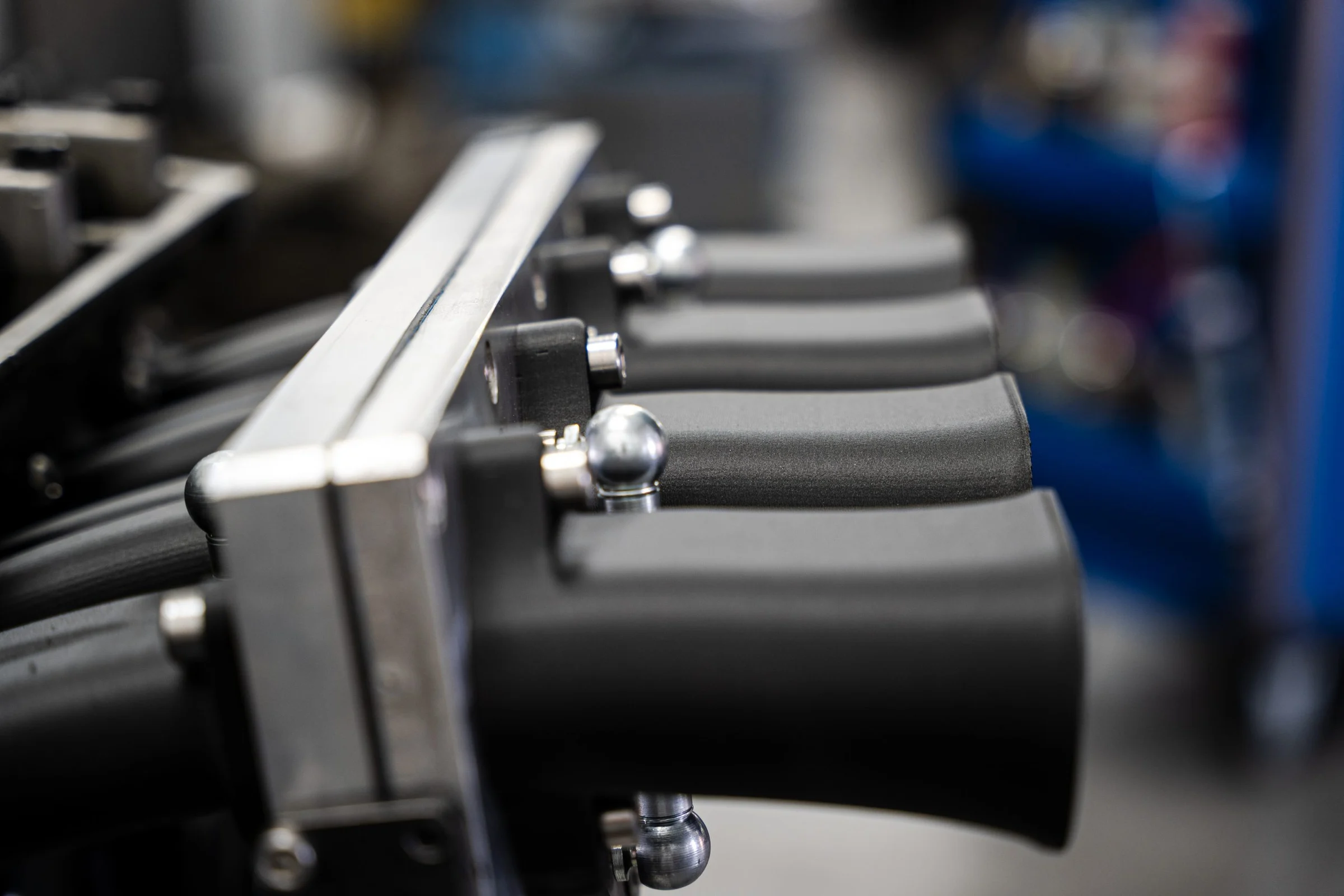
Prusament PA11 Carbon Fiber Black
Expand the portfolio with high-temperature materials
The HT Hotend also opens the door to an entirely new category of high-performance polymers, such as PPS-CF, PPS-GF, and PPA-CF Core. These materials are known for their exceptional thermal & chemical resistance and high durability. For example, PPS is not soluble in any known solvent below 200 °C.

The 400 °C hotend temperature allows printing even more advanced materials, such as PPSU, PEKK, PEEK, and PEI. However, the 60 °C chamber temperature is the limiting factor, as these materials may require higher ambient temperatures to print properly. Small components may be printed, though.
If you decide to print these materials, we highly recommend connecting your printer to a filtration system to protect your health. Most high-temperature materials emit dangerous fumes. We offer the Advanced Filtration System Upgrade that you can easily add to your CORE One/L printer. It is also possible to 3D print an adapter and hook the rear exhaust of the printer to an HVAC.

HighTemp sheet for CORE One/L 3D printers
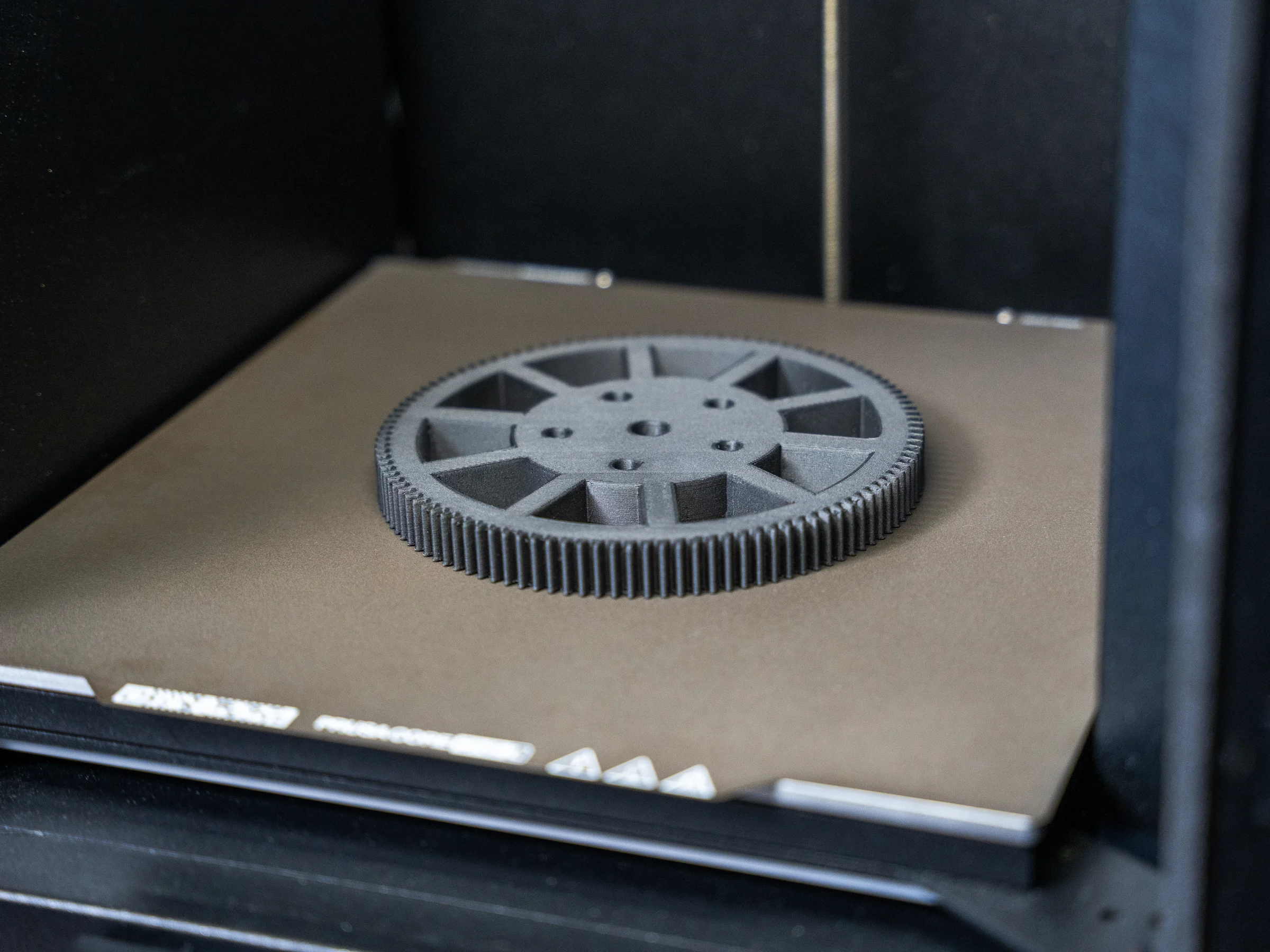
We already have the HighTemp sheet available for the Prusa Pro HT90 printer and we now also offer it for the CORE One+/L+. This sheet provides the best adhesion to materials such as PEI, PEEK, PEKK, PPSU, or PPS. It offers greater resistance to repeating high-temperature exposure, leading to a longer lifespan. If you plan to print standard Prusaments like PC Blend Carbon Fiber, you don’t have to get this type of sheet, also because standard materials ahdere poorly to this sheet’s surface.

More high-temperature materials in our e-shop
To make the start with HT Hotend easier, we’ve added the following materials in our shop:
- Siraya Tech Fibreheart PPA-CF Core
Polyphtalamide (PPA) is a high-performance polyamide that offers incredible wear resistance under cyclic load. PPA-CF has a thermal resistance up to 199 °C when annealed, and resists oils and fuels. This filament is filled with carbon fibers only in its core (Core-Shell technology). This enables stronger polymer bonding between the layers, increasing interlayer adhesion by 50 % compared to regular PPA-CF filaments. Such material can be used in automotive applications, for example, for components that come in close contact with the engine. - Fiberon PPS-CF10
Polyphenylene Sulfide (PPS) is a semicrystalline thermoplastic that offers the highest possible chemical resistance. This material is not soluble in any known solvent at temperatures below 200 °C. PPS is also a UL94 V0-certified self-extinguishing material without toxic additives. It offers incredible thermal resistance of 252 °C. The carbon fibers bonded inside the polymer improve its dimensional stability. The chemical stability of this material makes it suitable for highly specialized use, such as laboratory equipment. - Fiberon PPS-GF20
The glass fibers bonded inside the PPS improve its dimensional stability and electrical insulation properties. The 3D-printed parts don’t conduct electric charge and don’t block radio signals (Wi-Fi, Bluetooth, 5G). Also, they don’t cause unwanted effects, such as galvanic corrosion. This makes the printed components suitable for direct contact with aluminum, for example. This material is perfectly suitable for making various specialized electronics housings, where it benefits from self-extinguishing properties and radio signal permeability.
 |
 |
 |
Keep it dry
One more accessory that is recommended when printing these high-temp materials is the Prusa USS Drybox. Advanced high-temperature materials are highly hygroscopic. With filaments like PEI1010, moisture absorption takes mere hours – leave it unprotected, and a successful print becomes nearly impossible. The Prusa USS Drybox significantly slows down moisture absorption. Plus, it fits the CORE One spool holder perfectly, allowing you to keep the filament dry while printing.

By combining the HT Hotend, HighTemp sheet, and USS Drybox, the CORE One+/L+ scales into a complete high-temperature ecosystem. It proves the value of a modular upgrade path: instead of buying a dedicated industrial machine, you use one system for everything from standard PLA prototyping to manufacturing chemical-resistant PPS automotive parts.
Happy Printing!
You must be logged in to post a comment.