---
title: "ASA Prusament is here! Learn everything about the successor to ABS! - Original Prusa 3D Printers"
description: "Ten years ago, when you wanted to print anything on a RepRap 3D printer, you had pretty much only one option: ABS. It wasn’t exactly easy to get…"
url: "https://blog.prusa3d.com/asa-prusament-is-here-learn-everything-about-the-successor-to-abs_30636/"
lang: "en"
---

# ASA Prusament is here! Learn everything about the successor to ABS!

[Ondřej Stříteský](https://blog.prusa3d.com/author/ondrej-stritesky/) August 13, 2019 · 10 min read

[Featured](https://blog.prusa3d.com/category/featured_8/) [Guides](https://blog.prusa3d.com/category/guides_168/)

Ten years ago, when you wanted to print anything on a RepRap 3D printer, you had pretty much only one option: ABS. It wasn’t exactly easy to get everything right. Printing ABS without a heated bed introduced a number of issues. Soon, new materials started to appear, however, ABS remained among some of the most frequently purchased materials along with PLA and PET. We’re pretty sure that many of you built a 3D printer enclosure just because you needed to print with ABS.

When we started internal talks about a new Prusament type we could add to the current lineup of PLA and PET filaments, we wanted to have something **close to ABS**, but with **fewer cons**. Please welcome our [new ASA Prusament](https://prusament.com/materials/prusament-asa/)<strong>!</strong>

As always, we spent a lot of time with **research, development and testing**. We went through eight different types of nurdles (the source material for producing filaments). What sets various types of nurdles apart are three of their main monomers. However, choosing the best source material was only the beginning. Another important part are the pigments – additives, which affect more than just the color of the filament. Some of the testing samples we produced worked well with our printers and were easy to print with. On the other hand, they were extremely difficult to produce. Other samples were the exact opposite. Eventually, we found the ideal combination. Of course, you can inspect every purchased spool through our online tool and see all the [manufacturing parameters](https://prusament.com/#check-spool). You can find a detailed [technical data sheet here](https://prusament.com/media/2018/09/Prusament_techsheet_ASA.pdf).

ASA can be considered a true **successor to ABS**. Compared to ABS, it’s **UV stable**, it doesn’t suffer from shrinking so badly and the fumes produced are much less noticeable. ASA 3D prints are **durable**, **tough** and suitable for a wide range of applications. The glass transition temperature is also higher compared to PLA and PETG, which gives objects printed from ASA an **excellent temperature resistance** – there are no signs of deformation up to temperatures near **93 °C**. Thanks to all these properties, ASA is especially suitable to print objects meant for **long-time outside use**.

However, you can still encounter some issues related to shrinking (warping) of the material – especially when printing larger models. Even with the heatbed set to 110°C, the prints can shrink and warp, causing them to detach from the print bed. However, the effects are much less severe compared to ABS. This issue can be eliminated by printing inside an enclosure or by adding a tall skirt around the object. More about this later.

### Pros and cons of ASA

| Pros |  | Cons |  |
| --- | --- | --- | --- |
|  | Great for outside use – UV stable |  | Large models have a tendency to warp |
|  | High temperature resistance |  | Produces odors during printing (less than ABS) |
|  | Detailed prints without a stringing effect |  | Contains styrene |
|  | Can be smoothed with acetone vapors |  | Hygroscopic |
|  | Can be easily sanded / post-processed |  |  |
|  | Great layer adhesion |  |  |
|  | Soluble in acetone – can be used for gluing |  |  |
|  | High impact and wear resistance |  |  |
|  | Tough |  |  |
|  | Recyclable |  |  |

### Best applications for ASA

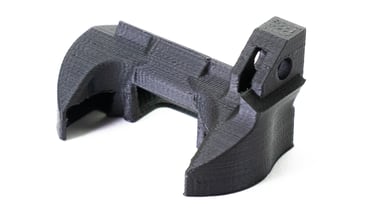
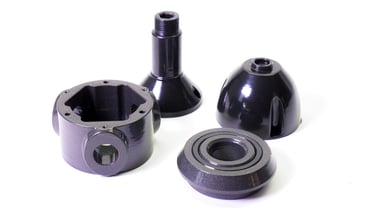
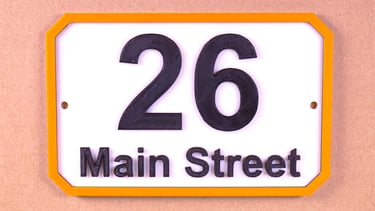
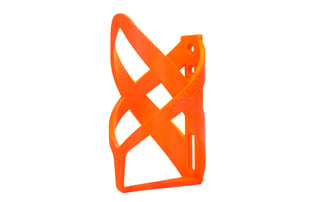
One of the biggest pros of ASA is its **UV stability** and the possibility to use **acetone for processing** – namely for **smoothing** out the surface or for **gluing** multiple ASA parts together. **High temperature resistance** is also a plus. For example, we use ASA to print the fan-shroud part for our 3D printers – this part creates an optimal airflow for cooling down the printed object.

<table class="is-borderless"><tbody><tr><td><img src="https://assets.prusa3d.com/cdn-cgi/image/width=371,quality=85,format=auto/https://storage.googleapis.com/prusa3d-content-prod-14e8-asset-manager-prod/d58afae4-d049-432e-92f0-32cd4c9bc447.jpg" srcset="https://assets.prusa3d.com/cdn-cgi/image/width=320,quality=85,format=auto/https://storage.googleapis.com/prusa3d-content-prod-14e8-asset-manager-prod/d58afae4-d049-432e-92f0-32cd4c9bc447.jpg 320w, https://assets.prusa3d.com/cdn-cgi/image/width=371,quality=85,format=auto/https://storage.googleapis.com/prusa3d-content-prod-14e8-asset-manager-prod/d58afae4-d049-432e-92f0-32cd4c9bc447.jpg 371w, https://assets.prusa3d.com/cdn-cgi/image/width=384,quality=85,format=auto/https://storage.googleapis.com/prusa3d-content-prod-14e8-asset-manager-prod/d58afae4-d049-432e-92f0-32cd4c9bc447.jpg 384w, https://assets.prusa3d.com/cdn-cgi/image/width=448,quality=85,format=auto/https://storage.googleapis.com/prusa3d-content-prod-14e8-asset-manager-prod/d58afae4-d049-432e-92f0-32cd4c9bc447.jpg 448w, https://assets.prusa3d.com/cdn-cgi/image/width=640,quality=85,format=auto/https://storage.googleapis.com/prusa3d-content-prod-14e8-asset-manager-prod/d58afae4-d049-432e-92f0-32cd4c9bc447.jpg 640w" sizes="(max-width: 371px) 100vw, 371px" data-zoom-index="14" loading="lazy" decoding="async" alt="" width="371" height="209"></td><td><img src="https://assets.prusa3d.com/cdn-cgi/image/width=381,quality=85,format=auto/https://storage.googleapis.com/prusa3d-content-prod-14e8-asset-manager-prod/6ed85956-21c5-42a6-8874-126c595686b4.jpg" srcset="https://assets.prusa3d.com/cdn-cgi/image/width=320,quality=85,format=auto/https://storage.googleapis.com/prusa3d-content-prod-14e8-asset-manager-prod/6ed85956-21c5-42a6-8874-126c595686b4.jpg 320w, https://assets.prusa3d.com/cdn-cgi/image/width=381,quality=85,format=auto/https://storage.googleapis.com/prusa3d-content-prod-14e8-asset-manager-prod/6ed85956-21c5-42a6-8874-126c595686b4.jpg 381w, https://assets.prusa3d.com/cdn-cgi/image/width=384,quality=85,format=auto/https://storage.googleapis.com/prusa3d-content-prod-14e8-asset-manager-prod/6ed85956-21c5-42a6-8874-126c595686b4.jpg 384w, https://assets.prusa3d.com/cdn-cgi/image/width=448,quality=85,format=auto/https://storage.googleapis.com/prusa3d-content-prod-14e8-asset-manager-prod/6ed85956-21c5-42a6-8874-126c595686b4.jpg 448w, https://assets.prusa3d.com/cdn-cgi/image/width=640,quality=85,format=auto/https://storage.googleapis.com/prusa3d-content-prod-14e8-asset-manager-prod/6ed85956-21c5-42a6-8874-126c595686b4.jpg 640w" sizes="(max-width: 381px) 100vw, 381px" data-zoom-index="15" loading="lazy" decoding="async" alt="" width="381" height="215"></td></tr><tr><td><em><strong>Fan shroud</strong> (High temperature resistance)</em></td><td><em><a href="https://www.thingiverse.com/thing:2851306" target="_blank" rel="noopener noreferrer"><strong>Wind power plant parts</strong></a> (surface smoothed with acetone vapors, mechanical resistance)</em></td></tr><tr><td><img src="https://assets.prusa3d.com/cdn-cgi/image/width=375,quality=85,format=auto/https://storage.googleapis.com/prusa3d-content-prod-14e8-asset-manager-prod/7f4ed84f-6970-4456-892f-80cba1a9a089.jpg" srcset="https://assets.prusa3d.com/cdn-cgi/image/width=320,quality=85,format=auto/https://storage.googleapis.com/prusa3d-content-prod-14e8-asset-manager-prod/7f4ed84f-6970-4456-892f-80cba1a9a089.jpg 320w, https://assets.prusa3d.com/cdn-cgi/image/width=375,quality=85,format=auto/https://storage.googleapis.com/prusa3d-content-prod-14e8-asset-manager-prod/7f4ed84f-6970-4456-892f-80cba1a9a089.jpg 375w, https://assets.prusa3d.com/cdn-cgi/image/width=384,quality=85,format=auto/https://storage.googleapis.com/prusa3d-content-prod-14e8-asset-manager-prod/7f4ed84f-6970-4456-892f-80cba1a9a089.jpg 384w, https://assets.prusa3d.com/cdn-cgi/image/width=448,quality=85,format=auto/https://storage.googleapis.com/prusa3d-content-prod-14e8-asset-manager-prod/7f4ed84f-6970-4456-892f-80cba1a9a089.jpg 448w, https://assets.prusa3d.com/cdn-cgi/image/width=640,quality=85,format=auto/https://storage.googleapis.com/prusa3d-content-prod-14e8-asset-manager-prod/7f4ed84f-6970-4456-892f-80cba1a9a089.jpg 640w" sizes="(max-width: 375px) 100vw, 375px" data-zoom-index="16" loading="lazy" decoding="async" alt="" width="375" height="211"></td><td><img src="https://assets.prusa3d.com/cdn-cgi/image/width=309,quality=85,format=auto/https://storage.googleapis.com/prusa3d-content-prod-14e8-asset-manager-prod/7ca92178-25f8-4579-9572-f802c489287c.jpg" srcset="https://assets.prusa3d.com/cdn-cgi/image/width=309,quality=85,format=auto/https://storage.googleapis.com/prusa3d-content-prod-14e8-asset-manager-prod/7ca92178-25f8-4579-9572-f802c489287c.jpg 309w, https://assets.prusa3d.com/cdn-cgi/image/width=320,quality=85,format=auto/https://storage.googleapis.com/prusa3d-content-prod-14e8-asset-manager-prod/7ca92178-25f8-4579-9572-f802c489287c.jpg 320w, https://assets.prusa3d.com/cdn-cgi/image/width=384,quality=85,format=auto/https://storage.googleapis.com/prusa3d-content-prod-14e8-asset-manager-prod/7ca92178-25f8-4579-9572-f802c489287c.jpg 384w, https://assets.prusa3d.com/cdn-cgi/image/width=448,quality=85,format=auto/https://storage.googleapis.com/prusa3d-content-prod-14e8-asset-manager-prod/7ca92178-25f8-4579-9572-f802c489287c.jpg 448w" sizes="(max-width: 309px) 100vw, 309px" data-zoom-index="17" loading="lazy" decoding="async" alt="" width="309" height="203"></td></tr><tr><td><em><strong>House number</strong> (UV-stable, the white background won’t turn yellow)</em></td><td><em><strong>Bottle holder</strong> (toughness, durability)</em></td></tr></tbody></table>

As for the **print quality, it is fully comparable to PLA**. ASA 3D prints are very **detailed**, **without stringing**, there are **no issues with bridging** **or overhangs**. You can see the overhang tests in the photo below (from left: 45°, 30°, 20° and 10° angles).

*First object is printed from Prusament PLA Lipstick Red, Prusament ASA Jet Black is in the middle, the last object on the right is printed from Prusament ASA Jet Black and post-processed (smoothed) using acetone vapors.*

*Left: Prusament PLA Galaxy Black, Right, Prusament ASA Galaxy Black*

**Chemical composition difference between ASA and ABS**  
ASA thermopolymers were developed with the aim to produce tough plastics with ABS-level properties, but with an added weather resistance. ABS is tough thanks to the rubber polybutadiene-based component. However, it also causes an increased sensitivity to UV light because of double bonds introduced through styrene co-polymers. However, if the butadiene rubber is replaced with acrylate rubber, the result will be ASA – a tough and weather-resistant material. In layman’s terms: Objects printed from ABS will lose their toughness and durability, plus they will also turn yellow during prolonged exposure to UV light. Objects printed from ASA can withstand these conditions for a much longer time.  
  
In the picture below, you can inspect two objects printed from ASA (the top one) and from ABS (the bottom one). These objects were placed outside and exposed to varying weather conditions. The right part of the model was covered and thus shielded from UV light. The difference is visible to a naked eye. Also, ASA (compared to PLA and PET) has a very high temperature resistance – up to 93 °C.

### How to print with ASA?

High temperature resistance, one of the advantages of ASA, brings a certain side-effect that needs to be taken into account during printing: printed objects are prone to **warping** and **lifting** from the print bed. This is caused by the temperature difference between the nozzle (260 °C) and the ambient room temperature. If the print cools down unevenly, it creates an internal tension, which results in print issues. Generally speaking, 10×10cm objects should print fine, however, there are many factors entering the equation – shape, infill, ambient temperature, airflow and others. Also, the rule of thumb here is that objects with a round base will spread out the internal forces more evenly compared to an object with a square base.

ASA printing requires specific conditions for successful results. It’s important to run the prints in a well-ventilated room, because the material **releases fumes** and substances that could pose a **potential health risk**. However, when ventilating the room, **do not create a draft** around the print – this will negatively impact the result.

### How to improve the quality of prints and eliminate defects

#### Skirt

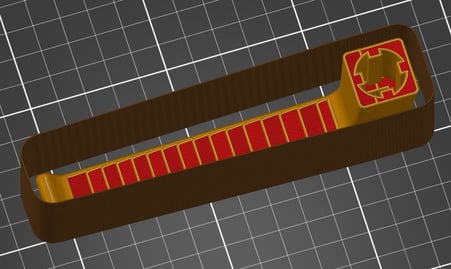
The easiest way to reduce bending or warping is to adjust the height of the “Skirt” to match the overall height of the model – a Skirt is a single-perimeter wall, which creates a “wall” around the object. This **reduces the cold air flow** around the object and also retains some of the hot air rising from the heatbed, which helps to reduce the difference between the nozzle and the print itself.

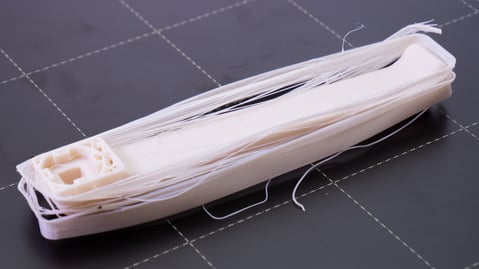
The original purpose of the skirt was to ensure there’s an optimal level of pressure inside the nozzle. When it comes to ASA, the skirt is used for a different purpose – which brings one problem: the skirt has a **shape derived from the shape of the printed model** (in the top-down view). This means that a model with a square base will result in a square-shaped skirt. And since it’s a single-perimeter wall, it may have a **tendency to lift** from the print bed in the corners, which may negatively affect the print.

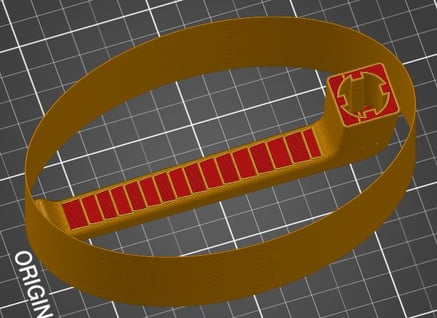
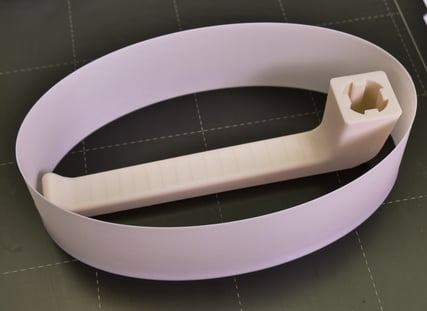
There’s a simple solution, though. You can create a **custom-made skirt** in [PrusaSlicer](https://www.prusa3d.cz/prusaslicer/) and it will take just a couple of seconds. **Import an [STL model of a cylinder](https://www.prusaprinters.org/prints/4853-cylinder-basic-geometric-shape)** along with the model you would like to print. Change the size and position of the cylinder, so it encompasses the main object. Then change the cylinder’s parameters to **0% infill, 0 top/bottom layers and change the wall thickness to 1 perimeter**. Yes, those are some extra steps, but the results are very well worth it.

<table class="is-borderless"><tbody><tr><td><img src="https://assets.prusa3d.com/cdn-cgi/image/width=451,quality=85,format=auto/https://storage.googleapis.com/prusa3d-content-prod-14e8-asset-manager-prod/6db13546-1882-41e4-8124-7049cc477ba6.jpg" srcset="https://assets.prusa3d.com/cdn-cgi/image/width=320,quality=85,format=auto/https://storage.googleapis.com/prusa3d-content-prod-14e8-asset-manager-prod/6db13546-1882-41e4-8124-7049cc477ba6.jpg 320w, https://assets.prusa3d.com/cdn-cgi/image/width=384,quality=85,format=auto/https://storage.googleapis.com/prusa3d-content-prod-14e8-asset-manager-prod/6db13546-1882-41e4-8124-7049cc477ba6.jpg 384w, https://assets.prusa3d.com/cdn-cgi/image/width=448,quality=85,format=auto/https://storage.googleapis.com/prusa3d-content-prod-14e8-asset-manager-prod/6db13546-1882-41e4-8124-7049cc477ba6.jpg 448w, https://assets.prusa3d.com/cdn-cgi/image/width=451,quality=85,format=auto/https://storage.googleapis.com/prusa3d-content-prod-14e8-asset-manager-prod/6db13546-1882-41e4-8124-7049cc477ba6.jpg 451w, https://assets.prusa3d.com/cdn-cgi/image/width=640,quality=85,format=auto/https://storage.googleapis.com/prusa3d-content-prod-14e8-asset-manager-prod/6db13546-1882-41e4-8124-7049cc477ba6.jpg 640w, https://assets.prusa3d.com/cdn-cgi/image/width=768,quality=85,format=auto/https://storage.googleapis.com/prusa3d-content-prod-14e8-asset-manager-prod/6db13546-1882-41e4-8124-7049cc477ba6.jpg 768w" sizes="(max-width: 451px) 100vw, 451px" data-zoom-index="21" loading="lazy" decoding="async" alt="" width="451" height="270"></td><td><img src="https://assets.prusa3d.com/cdn-cgi/image/width=479,quality=85,format=auto/https://storage.googleapis.com/prusa3d-content-prod-14e8-asset-manager-prod/abb365ee-3292-4cf2-b2cf-6efe73d2dbe8.jpg" srcset="https://assets.prusa3d.com/cdn-cgi/image/width=320,quality=85,format=auto/https://storage.googleapis.com/prusa3d-content-prod-14e8-asset-manager-prod/abb365ee-3292-4cf2-b2cf-6efe73d2dbe8.jpg 320w, https://assets.prusa3d.com/cdn-cgi/image/width=384,quality=85,format=auto/https://storage.googleapis.com/prusa3d-content-prod-14e8-asset-manager-prod/abb365ee-3292-4cf2-b2cf-6efe73d2dbe8.jpg 384w, https://assets.prusa3d.com/cdn-cgi/image/width=448,quality=85,format=auto/https://storage.googleapis.com/prusa3d-content-prod-14e8-asset-manager-prod/abb365ee-3292-4cf2-b2cf-6efe73d2dbe8.jpg 448w, https://assets.prusa3d.com/cdn-cgi/image/width=479,quality=85,format=auto/https://storage.googleapis.com/prusa3d-content-prod-14e8-asset-manager-prod/abb365ee-3292-4cf2-b2cf-6efe73d2dbe8.jpg 479w, https://assets.prusa3d.com/cdn-cgi/image/width=640,quality=85,format=auto/https://storage.googleapis.com/prusa3d-content-prod-14e8-asset-manager-prod/abb365ee-3292-4cf2-b2cf-6efe73d2dbe8.jpg 640w, https://assets.prusa3d.com/cdn-cgi/image/width=768,quality=85,format=auto/https://storage.googleapis.com/prusa3d-content-prod-14e8-asset-manager-prod/abb365ee-3292-4cf2-b2cf-6efe73d2dbe8.jpg 768w" sizes="(max-width: 479px) 100vw, 479px" data-zoom-index="22" loading="lazy" decoding="async" alt="" width="479" height="270"></td></tr><tr><td colspan="2"><em>Here’s an example of an automatically-generated skirt that detached from the bed mid-print</em></td></tr><tr><td><img src="https://assets.prusa3d.com/cdn-cgi/image/width=437,quality=85,format=auto/https://storage.googleapis.com/prusa3d-content-prod-14e8-asset-manager-prod/4464bf01-078d-45a2-b673-20ad199b14f8.jpg" srcset="https://assets.prusa3d.com/cdn-cgi/image/width=320,quality=85,format=auto/https://storage.googleapis.com/prusa3d-content-prod-14e8-asset-manager-prod/4464bf01-078d-45a2-b673-20ad199b14f8.jpg 320w, https://assets.prusa3d.com/cdn-cgi/image/width=384,quality=85,format=auto/https://storage.googleapis.com/prusa3d-content-prod-14e8-asset-manager-prod/4464bf01-078d-45a2-b673-20ad199b14f8.jpg 384w, https://assets.prusa3d.com/cdn-cgi/image/width=437,quality=85,format=auto/https://storage.googleapis.com/prusa3d-content-prod-14e8-asset-manager-prod/4464bf01-078d-45a2-b673-20ad199b14f8.jpg 437w, https://assets.prusa3d.com/cdn-cgi/image/width=448,quality=85,format=auto/https://storage.googleapis.com/prusa3d-content-prod-14e8-asset-manager-prod/4464bf01-078d-45a2-b673-20ad199b14f8.jpg 448w, https://assets.prusa3d.com/cdn-cgi/image/width=640,quality=85,format=auto/https://storage.googleapis.com/prusa3d-content-prod-14e8-asset-manager-prod/4464bf01-078d-45a2-b673-20ad199b14f8.jpg 640w, https://assets.prusa3d.com/cdn-cgi/image/width=768,quality=85,format=auto/https://storage.googleapis.com/prusa3d-content-prod-14e8-asset-manager-prod/4464bf01-078d-45a2-b673-20ad199b14f8.jpg 768w" sizes="(max-width: 437px) 100vw, 437px" data-zoom-index="23" loading="lazy" decoding="async" alt="" width="437" height="318"></td><td><img src="https://assets.prusa3d.com/cdn-cgi/image/width=427,quality=85,format=auto/https://storage.googleapis.com/prusa3d-content-prod-14e8-asset-manager-prod/f5ffb283-dfd7-4b6b-a528-81181e59536d.jpg" srcset="https://assets.prusa3d.com/cdn-cgi/image/width=320,quality=85,format=auto/https://storage.googleapis.com/prusa3d-content-prod-14e8-asset-manager-prod/f5ffb283-dfd7-4b6b-a528-81181e59536d.jpg 320w, https://assets.prusa3d.com/cdn-cgi/image/width=384,quality=85,format=auto/https://storage.googleapis.com/prusa3d-content-prod-14e8-asset-manager-prod/f5ffb283-dfd7-4b6b-a528-81181e59536d.jpg 384w, https://assets.prusa3d.com/cdn-cgi/image/width=427,quality=85,format=auto/https://storage.googleapis.com/prusa3d-content-prod-14e8-asset-manager-prod/f5ffb283-dfd7-4b6b-a528-81181e59536d.jpg 427w, https://assets.prusa3d.com/cdn-cgi/image/width=448,quality=85,format=auto/https://storage.googleapis.com/prusa3d-content-prod-14e8-asset-manager-prod/f5ffb283-dfd7-4b6b-a528-81181e59536d.jpg 448w, https://assets.prusa3d.com/cdn-cgi/image/width=640,quality=85,format=auto/https://storage.googleapis.com/prusa3d-content-prod-14e8-asset-manager-prod/f5ffb283-dfd7-4b6b-a528-81181e59536d.jpg 640w, https://assets.prusa3d.com/cdn-cgi/image/width=768,quality=85,format=auto/https://storage.googleapis.com/prusa3d-content-prod-14e8-asset-manager-prod/f5ffb283-dfd7-4b6b-a528-81181e59536d.jpg 768w" sizes="(max-width: 427px) 100vw, 427px" data-zoom-index="24" loading="lazy" decoding="async" alt="" width="427" height="311"></td></tr><tr><td colspan="2"><em>An example of a cylindrical / oval skirt created using a separate STL model</em></td></tr></tbody></table>

#### Printing inside an enclosure

One of the best options is to place the printer inside an **enclosure**. This helps to create a micro-climate inside the box and also the flow of cold air around the printer is eliminated. If you would like to build such an enclosure, we offer our own solution: [Printer Enclosure V1](https://blog.prusa3d.com/cheap-simple-3d-printer-enclosure_7785/) or [Printer Enclosure V2](https://blog.prusa3d.com/mmu2s-printer-enclosure_30215/) (with MMU2S support).

The recommended print temperatures for ASA: Nozzle – 260 °C, heatbed (first layer) – 105 °C, heatbed (all other layers) – 110 °C. You can find pre-made presets in PrusaSlicer under “Prusament ASA”.

### Which colors are available?

Due to a very specific use of ASA, we are offering **four colors** for now – some are inspired by other Prusament materials.

|  |  |
| --- | --- |
| [**Prusament ASA Jet Black**](https://shop.prusa3d.com/prusament/975-prusament-asa-jet-black-850g.html) – color similar to Prusament PETG Jet Black, not shiny | [**Prusament ASA Prusa Orange**](https://shop.prusa3d.com/prusament/977-prusament-asa-prusa-orange-850g.html) – same color as Prusament PETG Prusa Orange, not shiny |
|  |  |
| [**Prusament ASA Natural**](https://shop.prusa3d.com/prusament/976-prusament-asa-natural-850g.html) – color similar to Prusament PLA Vanilla White, without glitter | [**Prusament ASA Prusa Galaxy Black**](https://shop.prusa3d.com/prusament/974-prusament-asa-prusa-galaxy-black-850g.html) – color similar to Prusamet PLA Prusa Galaxy Black, not shiny |

All Prusament ASA filament spools have a **guaranteed minimal weight of 850 g**. Why not 1 kg like with every other spool? The reason is the **material density** – for **ASA**, this value is **1.07 g/cm3**, however, for **PLA and PETG it’s 1.25 g/cm3**. This means that the **volume of material on ASA, PLA and PETG spools is the same**. In other words, you can print the same number of objects from a 1kg spool of PLA/PETG as from a 850 g ASA spool. The amount of material is better specified using in volume units or length, rather than the overall weight of the spool. If we wanted to produce 1kg spools of ASA, we would have to manufacture a new, wider, core of the spool. This would mean we would have to produce new boxes as well, along with re-adjustments of our filament manufacturing lines and other issues.

### ASA post-processing

ASA is a material that can be **easily post-processed**. It’s possible to **sand** the parts using wet or dry sanding methods, **smooth** them out with acetone vapors, and glue them together with acetone. The result of acetone post-processing will be a **very glossy**, smooth surface similar to a surface treated with car paint. However, this also leads to a **loss of small details and rounding of sharp edges**.

**WARNING: Acetone and its vapors are highly flamable! Acetone may also cause serious eye irritation, drowsiness or dizziness.**

You can easily build an acetone smoothing chamber. You will need a container that’s acetone-resistant (e.g. from PP – Polypropylene). The best option is to have the print suspended in mid-air, so it’s not touching anything – contact areas would be easily recognizable. Then, pour some acetone on the bottom of the container and close it. You can accelerate the process with a fan (for quicker air circulation), or by slight heating of the chamber. Do not work with open fire anywhere near acetone or where acetone vapors may be present! **Acetone is highly flamable!**

What affects the results the most are the length of the exposition of the object to acetone vapors, the temperature of the vapors, acetone vapor concentration and the vapor flow in the chamber. Keep in mind that smoothing causes a **slight increase of the object’s volume**, and the **surface will remain soft for several hours** after smoothing. If you want to smooth out only some parts of the model, use a regular tape to mask selected areas.

While this is a great way how to make the surface nice, smooth and shiny, it’s not a universal solution. We would advise not to use this method in case you’re trying to achieve a perfectly precise result. Plus, acetone can create white maps on dark colors and if the liquid gets inside the print, it will deform the object.

## Related articles

### [Blender for 3D Printing: The 5-Minute Guide to STL Editing](https://blog.prusa3d.com/blender-for-3d-printing-the-5-minute-guide-to-direct-mesh-editing_138255/)

**Kryštof Kohout** October 20, 2026

### [Print colorful and glowing Halloween decorations with our spooky offer](https://blog.prusa3d.com/get-ready-for-halloween-with-our-spooky-filament-offer_138639/)

**Prusa Research** October 6, 2026

### [Open Community License v1.1: The New Plugin System, More Examples, and Your Questions Answered](https://blog.prusa3d.com/open-community-license-v1-1-the-new-plugin-system-more-examples-and-your-questions-answered_137202/)

**Prusa Research** June 24, 2026

## Useful links

-   [Prusa Knowledge Base](https://help.prusa3d.com/)
-   [RepRap Calculators](https://blog.prusa3d.com/calculator_3416/)
-   [3D Printing Price Calculator](https://blog.prusa3d.com/3d-printing-price-calculator_38905/)
-   [Filament Material Guide](https://help.prusa3d.com/filament-material-guide)
-   [Color Print](https://blog.prusa3d.com/color-print_3993/)
-   [About Original Prusa i3](https://blog.prusa3d.com/prusa-i3_3543/)
-   [Prusa CORE One+ 3D Printer](https://www.prusa3d.com/product/prusa-core-one/)
-   [Original Prusa XL – Toolchanger 3D Printer](https://www.prusa3d.com/en/product/original-prusa-xl-assembled-5-toolhead-3d-printer/)
-   [Prusament](https://www.prusa3d.com/category/prusament/)

## Categories

-   [Announcements](https://blog.prusa3d.com/category/highlights_10/)
-   [Featured](https://blog.prusa3d.com/category/featured_8/)
-   [Guides](https://blog.prusa3d.com/category/guides_168/)
-   [Contests](https://blog.prusa3d.com/category/contests_596/)
-   [Prusa Stories](https://blog.prusa3d.com/category/prusa-stories/)
-   [Testimonials](https://blog.prusa3d.com/category/testimonials_590/)
-   [Printing tips](https://blog.prusa3d.com/category/printing-tips_591/)
-   [Dev Diaries](https://blog.prusa3d.com/category/dev-diaries_594/)
-   [Video](https://blog.prusa3d.com/category/video_166/)
-   [Interviews](https://blog.prusa3d.com/category/interviews_167/)
-   [Winners](https://blog.prusa3d.com/category/winners/)

## Most read articles

[Prusa Black Friday 2026 Is Here! Grab the Biggest Deals of the Year October 22, 2026](https://blog.prusa3d.com/prusa-black-friday-2026-is-here-grab-the-biggest-deals-of-the-year_138966/)[PrusaSlicer 3.0 Preview – Built for the Future of 3D Printing September 1, 2026](https://blog.prusa3d.com/prusaslicer-3-0-preview-built-for-the-future-of-3d-printing_137672/)[How Firefighters Use 3D Printing to Save Lives, Time and Money October 30, 2026](https://blog.prusa3d.com/how-firefighters-use-3d-printing-to-save-lives-time-and-money_138620/)[Blender for 3D Printing: The 5-Minute Guide to STL Editing October 20, 2026](https://blog.prusa3d.com/blender-for-3d-printing-the-5-minute-guide-to-direct-mesh-editing_138255/)[Multicolor Printing with a Prusa: Beginner’s Guide February 21, 2025](https://blog.prusa3d.com/multicolor-printing-with-a-prusa-beginners-guide_110590/)